Q:In your view, what can be done to accelerate the pace of transformation in the Cannabis farming industry in South Africa?
ML: I think you see when we are talking about the South African context with regards to the Cannabis farming industry, it is fairly new, extremely new, an infant industry so I would like to maybe answer it in rephrasing that ‘transformation’ and talk about the fast pacing or the acceleration of inclusivity within the industry, and how we look at accelerating the pace of inclusivity within this industry. When I talk about inclusivity, we need to remember the fact that we’ve got your historic growers, you know, your Rastafarians and we look at certain provinces that have historically been growing Marijuana for hundreds of years, the Eastern Cape being a good example of a province, and rural growers within your Transkei regions –your Mount Frere, Matatiele, I’ll call your Mpondo regions of the Eastern Cape. These type of individuals unfortunately do not have the right tools with them to access the necessary financing, and the necessary resources to truly be players within the industry. And I feel like the government needs to look at creating either breaking down those barriers into entry for these people that been growing historically, generationally growing Marijuana within South Africa to be able to now play on the global stage, to become participants that now contribute on the global stage through the South African industry.
Q: From your upbringing to now you being a successful young & emerging farmer –can you tell us more about your background and your journey leading up to now?
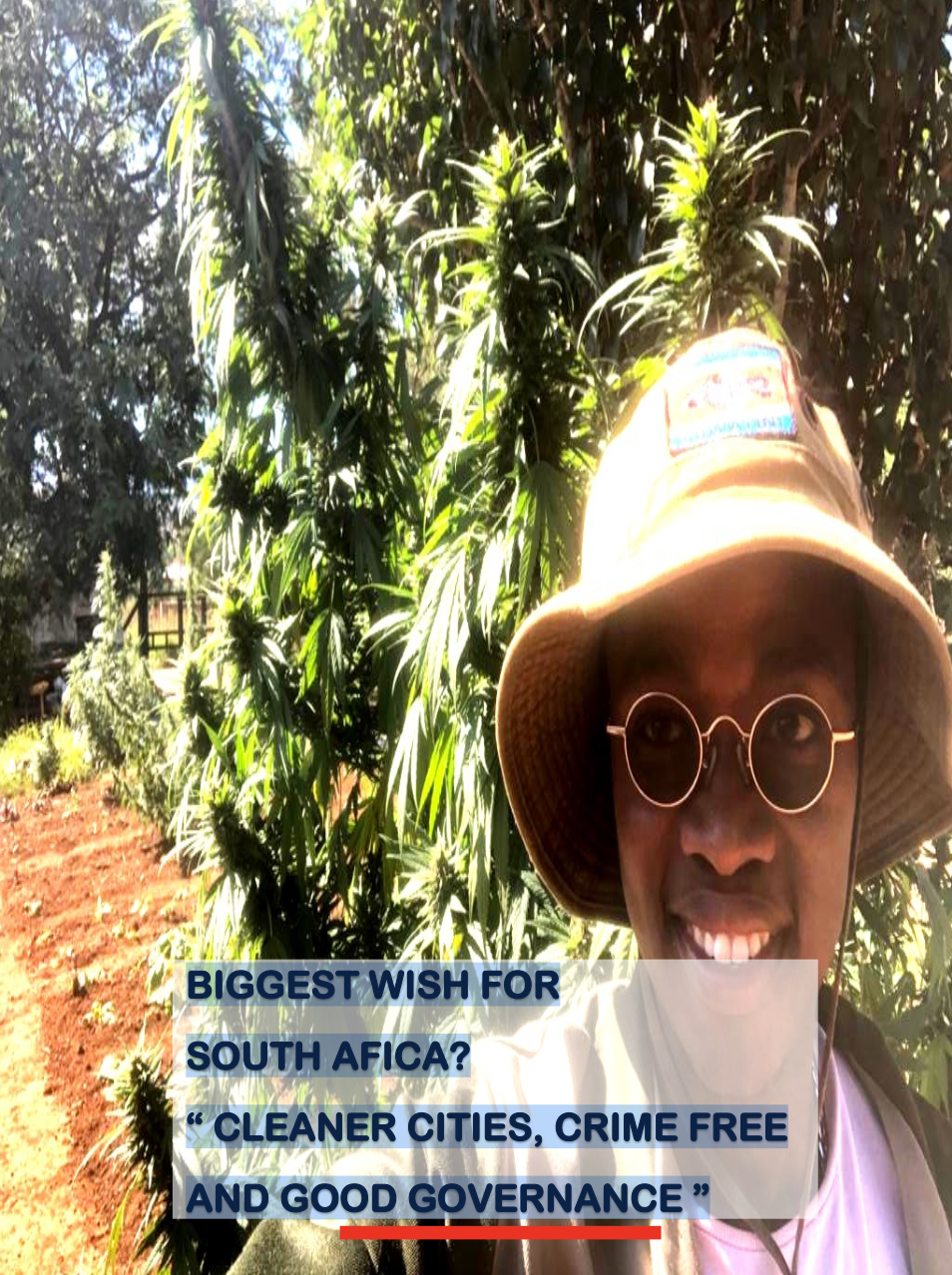
TS: So I’d like to start by saying my upbringing was challenging, not in the financial sense but more in the sense of just the rebellious nature that I had you know growing up, I was always a rebellious child, struggled to listen and really thought I had my life figured out whilst I was still young. And I was really hit with the stark reality of how tough it is out in the world once I took on my first job after my first degree, and things were very hard, you know, things were very hard outside of my parents’ home, and realising how tough it is out there on your own. I ended up deciding to leave work and go back and study again, and in me finishing that again I was then a graduate that was looking for a job and struggling to find the type of jobs that I wanted, you know. And that left me with a lot of free time as an unemployed graduate were I started taking up gardening and my very first plant was Marijuana, I decided hey... you know I was an enjoyer of Marijuana in my leisure time and I thought ‘why not grow it’. That’s where my love for gardening started, you know, and I went into this rabbit-hole where I just started doing Intensive research on Marijuana, on how you grow it, on the processing and all these steps into getting a finished product and multiple different types of products that you could make out of it. So yeah, that let me into wanting to grow now a whole other variety of plants, and I really went into it man, I was very passionate about it and I started going down further this rabbit-hole of going beyond the Marijuana and now looking at other people that had this similar passion, young farmers that were out there, checking out what it is that they were doing and that inspired me to actually go for it. That’s when I relocated from Gauteng and I made the great move... we call it the exodus in the family. I made the exodus to come the Eastern Cape and pursue my love for farming here.Q: Do you believe that government’s NDP will effectively alleviate poverty, create jobs and provide equality, especially in regards to the farming and agricultural sector? More so in the Cannabis farming industry?
ML: I believe that the government’s NDP in black and white sounds very great, it sounds very promising, it gives a lot of hope. But what I doubt is the government’s political will-power to actually implement and act on all these resolutions that you find in the NDP. I think it also goes to say with the Cannabis Masterplan, there was a lot of planning, a lot of consultation with various groups, advocacy groups, Marijuana growers, Marijuana connoisseurs and different people within the industry, you know... and a very well written, well put together document came out as a result. But what we keep on seeing is a lack of political will to go out and implement these resolutions that take place.
Q: What skills do you think that new or emerging Cannabis farmers need to survive in this industry?
TS:First and foremost I believe that looking into the future the Cannabis industry is going to be one that’s extremely technologically intensive, so I believe that’s one skill that’s going to be very important for emerging farmers. People need to be tech-savvy and have an understanding of the tech that’s involved in producing Cannabis, especially if you talking about Cannabis on a medical standard, you know, you need to have a very controlled environments, and there’s a lot of machinery and technical nuances that you need to be familiar with as an emerging farming to stay competitive in an ever growing industry... and it’s going to grow at a very exponential rate. It’s just the beginning at the moment. I think another thing that’s very import is just simply having a passion because you really need to be there constantly, you need to be there and monitor throughout all these processes from your growing stages, especially when you’re talking about it in the formal aspect, your cloning side of things, the bud development. If you don’t have the technical expertise yourself, have a team around that is able to manage each and every stage growth of your plant, so you need to have that technical power you know, it’s a skill on its own to have the technical know-how of knowing how to manage each and every stage because there are nutritional requirements according to the different growth stages of the plant. And I think what’s even more important is how the drying is done, how you manage your drying process, your curing process as well, these are all technical skillsets that you need to have. And last but not least, very important as well; is marketing, marketing, marketing. This is an industry that thrives-off of good marketing, and I think a very good aspect that people kind of overlook is the packaging, which is a very big marketing component especially with this product. Your packaging is everything especially when you’re talking about a plant that you would probably be sending to all corners of the world.
Q: Greatest lesson/s you’ve learned about being in the production industry?
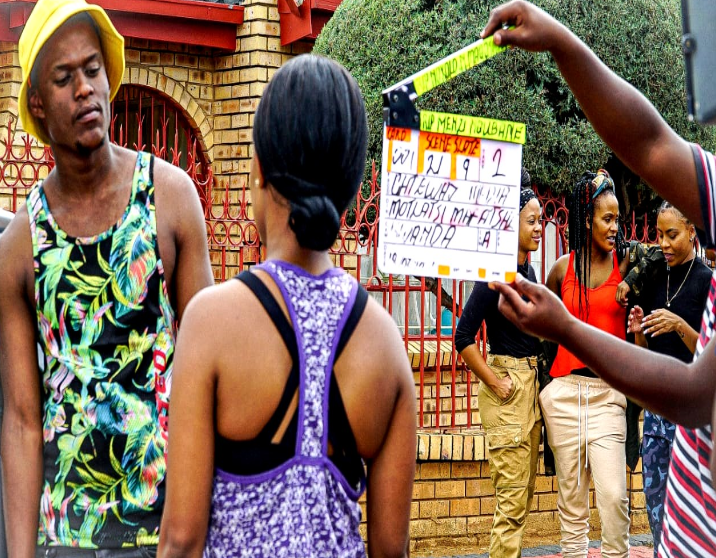
ML: The greatest lesson we’ve learned about being in this industry is that qualifications don’t really matter, it’s not a necessity to have a qualification of any kind in the media industry. I believe everyone is born for something so I would say that if it’s something that God has purposed for you, dark or blue come hell or high waters you still can be able to do it, as long as you set your mind right and you give it your all. One of the biggest lessons that I realised in the production industry is that whenever you feel like you wanna do something, don’t even think twice – just work on it and give it your all, all you got to do is start what you want to do, people will catch up and you will also grow and improve as time goes by.
Q: Foreign investors’ confidence in South Africa is low at the moment. What do you think needs to happen to restore investor confidence in the country, more so in the farming of Cannabis industry?
ML:What we need is more young people with an entrepreneurial spirit and an entrepreneurial mind-set that are willing to break the mould, break the status-qou and be disruptive. I think with this industry the winners, and we are seeing this in places like America in the state of California, that the true winners are people that are being very disruptive and very innovative. I think that kind of correlates a lot most of the time with young people, young people that are creative enough to come up with innovative ideas, seek help from the government to aid us with resources with our endeavours. My advice for people who are struggling to make it would be just get started and start small, I think what’s very important is proof of concept, you need to demonstrate your ability to show a working system irrespective of the scale to the person that would be able to lend you help.
Q:As a young & black emerging farmer in this sector, what are the challenges that you have experienced/ are experiencing, and what advice do you have for people struggling to make it?
ML:First and foremost the challenges that we face as young black farmers are never ending, they are recurring on a daily basis and what we need to do is just reserve the problem solving mindset because on a daily basis there’s a new problem and you need to think about how you can solve it and that the only way to move forward. And I think one of the most prominent challenges that we face as young farmers in the industry is access to capital, it is the biggest challenge because a lot of us don’t come from homes that have generational wealth.